- Storage temperature
- 30 °C
- Inlet temperature
- 25 °C
- Inlet humidity
- 65%
Suitable air
Blower on
- Aeration needed. Storage temperature reaches the 28 °C start threshold.
- Incoming air is suitable. The air is 5 °C cooler and humidity is below the 70% limit.
GrainSense · TELEPATI 8.0
I developed ESP32 firmware and a dashboard for a grain silo holding about 11 kg. The controller checks the grain and incoming air before starting the blower.
Explore blower decisions Open 3D demo
3D model
Drag the model to turn it. Select a component to see what it does.
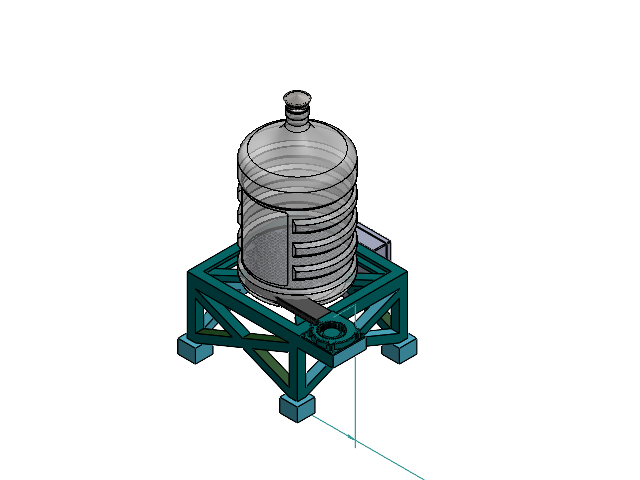
Stores the grain while sensors monitor conditions and air passes through.
Sustained high storage temperature or CO₂ can trigger a need for aeration. The blower starts only when incoming air meets the humidity limit and is sufficiently cooler than the air inside.
The ESP32 makes the decision locally. The dashboard receives sensor readings, blower status and the reason via MQTT, so users can see why aeration starts or waits.
Try three starting conditions from the firmware’s temperature rules. The demo uses sample readings.
Suitable air
Humid air
Temperature under control
Each example starts with the blower off, the waiting period complete and the CO₂ trigger inactive. The firmware also enforces minimum on/off times and stop thresholds to avoid frequent cycling.
View GrainSense on GitHubThis case study covers an approximately 11 kg demonstrator. Sensor accuracy, network outages, operating duration and effects on grain quality require further testing.
I integrated the hardware, wrote ESP32 firmware and built the MQTT–ThingSpeak pipeline. I also wrote the proposal, prepared the poster and presented our results.
Sensors measure mass, moisture, CO₂, temperature and humidity, with temperature and humidity sampled at two points. The controller considers both the grain and the incoming air. We demonstrated it on a mini-silo.
I worked with Muhammad Riyu Saputra and Roven Angger Djuha Al-Haq under the guidance of Diky Zakaria.